The German commercial corridor of Detroit's west side.
Michigan Avenue between 20th Street and Vinewood carries layers of movement, immigration, commerce, market life, industry, disinvestment, and return. The district's surviving brick storefronts are part of the Michigan Avenue Historic Commercial District, listed on the National Register of Historic Places in 2020.
An ancient Indigenous route became one of Detroit's five radial avenues after the 1805 fire.
The Michigan Central Railroad and streetcars made the avenue a durable west-side spine.
By the late 1800s, brick shops, saloons, grocers, butchers, and trades filled the corridor.
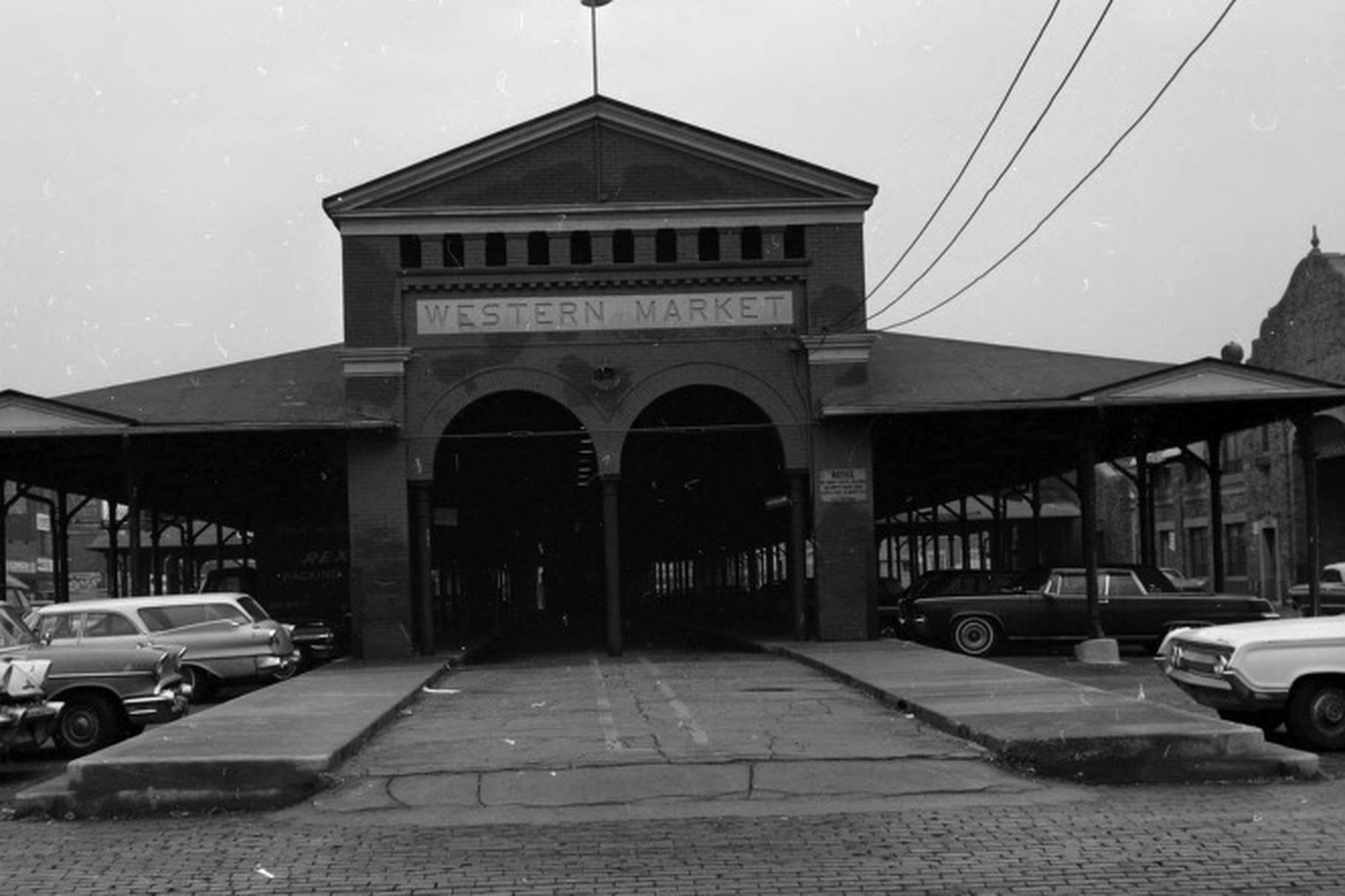
The public market at Michigan and 18th anchored food distribution and neighborhood shopping.
The road before the city.
Long before Detroit had a street grid, the Sauk Trail carried Indigenous travelers between the Great Lakes and the interior of the continent. After the fire of 1805, Augustus Woodward's plan for Detroit used five great radial avenues, and Michigan Avenue followed that old path westward toward the interior of Michigan and, eventually, Chicago.
The Brevoort Farm occupied land between the avenue and the Michigan Central Railroad tracks before industrial Detroit expanded west. The railroad followed the same diagonal logic as the avenue, connecting Detroit to Chicago and helping make the corridor one of the Midwest's consequential routes.
Irish foundations and German expansion.
Irish immigrants, many from County Cork, settled the near west side in the 1840s and 1850s, giving Corktown its name and establishing churches, homes, saloons, and small businesses along Michigan Avenue.
As Detroit grew westward, German immigrants extended beyond Corktown into the open land between 20th and 24th Streets. By the 1870s and 1880s, farmland was being subdivided and brick commercial buildings were rising where crops had grown a generation earlier.
A working commercial village.
The early business mix tells the story of everyday neighborhood life: wood and coal merchants, carriage and wagon shops, shoe stores, saloons, butchers, grocers, physicians, druggists, tailors, and wallpaper merchants. Many tradespeople lived above their shops and served customers they knew by name.
Buildings from this founding period, including the 1887 Reeber Building and the 1889 Schulte and Kaiser Building, still root the corridor. German cultural institutions, churches, social halls, choral societies, and merchant networks shaped both the social life and architectural character of the district.
Modern infrastructure and Western Market.
The 1890s brought water infrastructure, electric lighting, streetcar service, and intensified land use. Horse-drawn Michigan Avenue trolleys had appeared in 1863; electrified streetcars later became the spine of neighborhood life.
Western Market was established by Detroit's Common Council in 1891 at Michigan Avenue and 18th Street. As the west-side counterpart to Eastern Market, it functioned as a wholesale food distribution hub where vendors served grocers, shoppers, and surrounding neighborhoods from sheds, carts, and trucks.
The automobile age.
The automobile economy transformed Detroit and the west side. Ford Motor Company was founded in 1903, Michigan Central Station opened in 1913, and factory wages supported a corridor of grocers, jewelers, banks, theaters, candy stores, furniture stores, decorators, and neighborhood services.
Music and nightlife followed workers and wages. Detroit's jazz culture, from major venues to neighborhood clubs, moved through the same industrial and streetcar city that sustained commerce along Michigan Avenue.
Decline, widening, freeways, and patience.
The Depression brought vacancies. A mid-1930s Michigan Avenue widening removed buildings on the north side of the avenue, leaving the south side as the most intact collection of commercial architecture in this stretch.
Postwar factory movement, population loss, urban renewal, and freeway construction severed neighborhoods and displaced residents. Western Market was demolished in 1965 for Interstate 75. Still, the surviving two-block commercial district held its bones together through decades of disinvestment.
Recognition and return.
The restoration and reopening of Michigan Central Station marked a powerful return of attention to the corridor. In 2020, the Michigan Avenue Historic Commercial District, including the core of the old German commercial neighborhood, was listed on the National Register of Historic Places.
The Western Market building is gone, but the commercial district survives. Its brick pavers, storefronts, signs, and masonry details connect today's businesses to a lineage of merchants, residents, workers, and market-goers who made Michigan Avenue a working civic spine.
Milestones along Michigan Avenue.
Sauk Trail establishes the westward path later followed by Michigan Avenue.
Detroit is replatted after the fire; Michigan Avenue becomes one of Woodward's radial avenues.
The Michigan Central Railroad reinforces the corridor's connection to Chicago and the Midwest.
Horse-drawn trolley cars begin service along Michigan Avenue.
Founding commercial buildings such as the Reeber Building and Schulte and Kaiser Building rise along the corridor.
Western Market begins serving the west side at Michigan Avenue and 18th Street.
Michigan Central Station opens, intensifying the corridor's role in Detroit's industrial era.
Western Market is demolished as freeway construction reshapes the west side.
The Michigan Avenue Historic Commercial District is listed on the National Register of Historic Places.
Architecture the website can carry forward.
The original market house and surviving corridor suggest a design system that feels local without becoming nostalgic: masonry arches, triangular pediments, limestone sign bands, brick storefronts, exposed shed posts, diagonal avenue geometry, and strong storefront lettering.